Industrial Control Panel

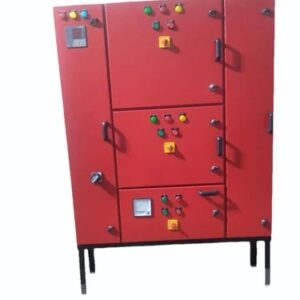
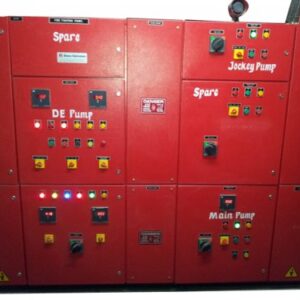
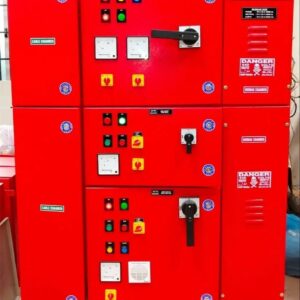
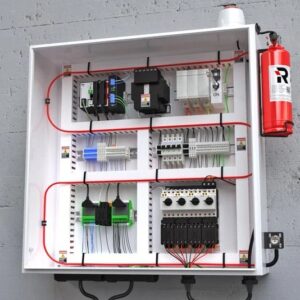
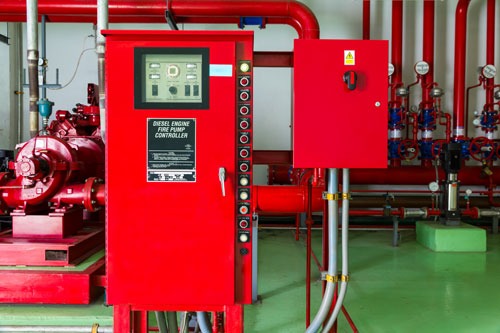
An Industrial Control Panel (ICP) is an electrical enclosure that centralizes control, monitoring, and protection of machinery and processes, ensuring safe and efficient industrial operations.

Industrial control panels provide centralized management of motors, pumps, and electrical systems with integrated MCCBs, relays, PLCs, VFDs, and meters. Designed for automation, they support PLC-based process control to improve efficiency and safety. Built-in protections safeguard against overloads, short circuits, and electrical faults, ensuring reliable operation. Durable mild steel or powder-coated enclosures withstand harsh industrial conditions. Available as MCC, PCC, APFC, VFD, or fully customized solutions, these panels enable easy monitoring through digital displays, alarms, and indicators. Compliant with IS/IEC standards, they deliver long service life with minimal maintenance.

Description

Industrial Control Panel (ICP)

Key Features:

  • Centralized Control: Integrates multiple electrical devices such as MCCBs, relays, PLCs, VFDs, contactors, and meters.
  • Automation Ready: Supports programmable logic controllers (PLCs) and advanced automation systems for efficient process control.
  • Safety & Protection: Provides overload, short-circuit, and fault protection to safeguard machines and operators.
  • Custom-Built Design: Can be designed as MCC (Motor Control Centers), PCC (Power Control Centers), APFC (Automatic Power Factor Correction), VFD Panels, or custom solutions.
  • Durable Construction: Made with mild steel or powder-coated enclosures to withstand industrial environments.
  • Ease of Monitoring: Equipped with meters, digital displays, alarms, and indicators for quick system status checks.

Applications:

  • Manufacturing plants & production units
  • Oil, gas & chemical industries
  • Food processing & pharmaceuticals
  • Water treatment plants & utilities
  • Heavy machinery & engineering industries

Advantages:

  • Improves efficiency and safety of industrial operations
  • Ensures centralized monitoring and smooth functioning of equipment
  • Reduces downtime with proper fault protection and automation
  • Long service life with low maintenance requirements
  • Designed in compliance with IS/IEC safety standards